About Imperial Topaz
Imperial Topaz - The Noble Gem
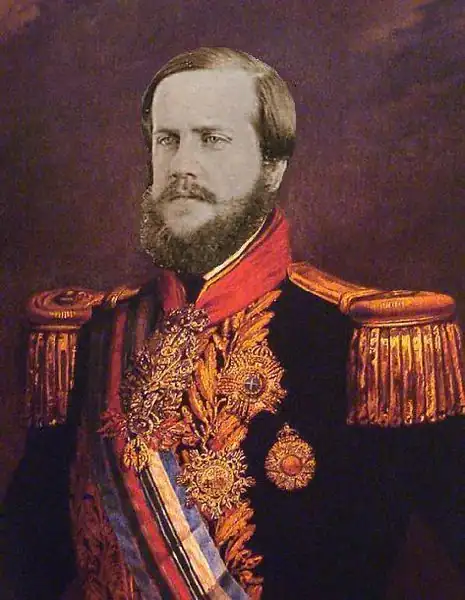
Imperial Topaz gets its name from former Emperor of Brazil Dom Pedro II, who reserved the finest quality specimens mined within Brazil’s borders for use by the Brazilian Imperial family. Imperial Topaz gets its name from its use by royalty throughout history. Imperial topaz itself is comprised of golden-orange to reddish-pink crystals and is one of the rarest topaz gems in existence. Pure Imperial Topaz can only be found in one place on earth: Minas Gerais, Brazil.
Imperial Topaz gets its color from impurities of chromium within the crystal itself. Chromium also gives emeralds their green color, and rubies their red color, however due to the rarity of Imperial Topaz it is considered rarer than both.
Imperial Topaz crystals are mined in many places, but true Imperial Topaz can only be found in Brazil. Imperial Topaz can come in a variety of colors ranging from deep champagne and cognac amber, to salmon pink and reddish-orange. These colors are rarely found in common topaz, which tends to be blue or white.
The first discovery of Imperial Topaz was made in the 1700s in the Brazilian city of Ouro Preto. Initially, upon spotting the golden sparkles in the ground, the miners had originally thought the crystals were gold - however when the miners reached the area now known as Ouro Preto, it turned out to be a novel type of beautiful topaz that turned to be worth more than gold.
Brazil’s former emperor Dom Pedro II, who ruled Brazil between the years of 1831 and 1889, cherished and loved Imperial Topaz so much, that he passed laws restricting who could mine, sell or keep Imperial Topaz, to ensure its exclusivity among the royalty and nobility. Only the finest specimens became part of the Imperial collection. Records show that Dom Pedro rarely approved to sell or gifted Imperial Topaz to anyone who did not sit upon a throne.
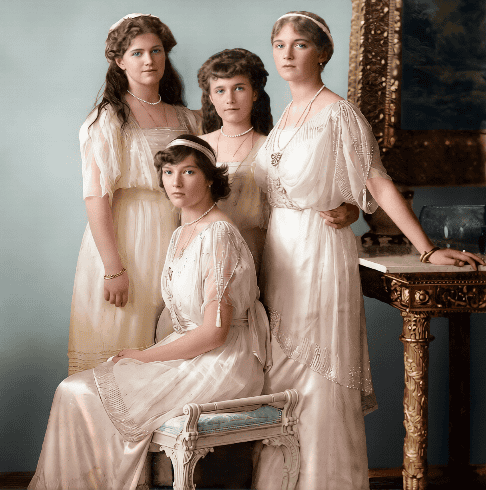
One of the earliest royal families to fall in love with Imperial Topaz was the royal family of Russia. Several pieces containing Imperial Topaz are known to have been in the possession of Tsar Nicholas II and his wife Alexandra.
Royal families all over Europe sought out Imperial Topaz for their courts once the gem made its way through diplomatic channels. Imperial topaz became known as the “royal gem” throughout Europe, with only the richest able to attain samples of the rare mineral. In Russia Imperial Topaz came to symbolize the strength of the Romanov family. As royal gifts from Dom Pedro II of Brazil made their way through Europe more and more heads of state became aware of the valuable resource found within Brazil.

The three premium sought-after colors of Imperial Topaz
How Cognac-Colored Imperial Topaz is Being Graded
Cognac colored Imperial Topaz is one of the rarest and most coveted natural gemstones on Earth. Imperial Topaz itself is already a rare mineral, but the deep, warm brown-orange shade that signifies fine Cognac is particularly desirable and hard to come by.
Most Imperial Topaz found during mining operations are lighter and less saturated. Only the smallest percentage of gemstones come up from the mine with the warm, glowing richness that we consider true Cognac color.
It’s this scarcity that makes Cognac Imperial Topaz so highly prized. But what makes Cognac Imperial Topaz desirable isn’t just its rarity: A deep Cognac shade will always remind one of wealth, sophistication, and old-world glamour. Light shining through a premium Cognac Imperial Topaz has a luminosity to it that resembles the rich, deep color of fine Cognac in a glass. The color has depth and richness that is second to none. Couple that with a hue that complements virtually any skin tone and type of metal, and you have a gemstone that is in high demand for custom jewelry pieces and gem collections alike.
Don’t confuse Cognac colored Imperial Topaz with similar warm-toned Imperial gems. Champagne and Peach colored Imperial Topaz are both beautiful stones, but they fall into different categories when it comes to color and value. While Champagne Imperial Topaz features lighter, golden-beige tones, Peach colored Imperial Topaz is imbued with a soft, pinkish-orange shade. Cognac Imperial Topaz, on the other hand, is deeper, more saturated, and features more color layers than either of these other stones.
Expect Cognac Imperial Topaz to have rich notes of deep orange, amber, and brown when held up to light. This is what gives Cognac Imperial Topaz its reputation as one of the most valuable Imperial Topaz varieties.
At the Imperial Topaz Company, we take grading Cognac Imperial Topaz seriously. While many companies may give their own Imperial Topaz gems the ‘Cognac’ classification, we take steps to make sure that only real Cognac-colored Imperial Topaz is sold under that name:
Each and every stone that we come across is compared against a color chart to ensure that it meets requirements to be considered Cognac-colored. Only Cognac Imperial Topaz gems are offered up to our customers. But we don’t just compare stones to a color chart. The real difference between the way we grade Cognac Imperial Topaz and other companies is that we use real Cognac as part of the grading process. For the comparison, we use bottles of some of the finest Cognac in the world to color match Imperial Topaz gems. Our go-to bottles are Rémy Martin Louis XIII, Camus XO, Henri Mounier Extra, and Tiffon XO. All four of these bottles exhibit a luxurious cognac color that falls within the denomination for the Cognac shade range.
Rémy Martin Louis XIII, Camus XO, Henri Mounier Extra, and Tiffon XO are all prestigious cognacs that share deep amber tones and brown-orange notes. While the colors of each bottle are not identical, they form the ideal range for the Cognac denomination - creating the proper gradient color scale for gemological grading.
It’s this meticulous process that ensures you receive a quality product from us when you buy a Cognac Imperial Topaz.
Suzerain Universal LTD
The Imperial Topaz Company is a fully owned division of
Suzerain Universal LTD.
Among Suzerain's activities in the world of rare and precious gemstones, Suzerain produces and sells rare natural Emeralds from the renowned mines of Colombia, as well as rare, natural Imperial Topaz from the mines of Ouro Preto, and natural Padparadscha Sapphire from Sri Lanka, along with other scarce gemstones and minerals.